
10
Years of Academic Counselling with Visa Guidance & Support
About Unipath Connect
A Study-abroad Plan Starts With Outcomes
We begin with what you want your degree to unlock—career, graduate school, immigration possibilities, cost constraints—then select countries and institutions that fit those outcomes. Competitors succeed by presenting this as a “journey” with a clear start and clear steps; Unipath Connect should do the same, but with practical decision tools.
-

U.S. Application Support
Many students apply through the Common App, which connects applicants to more than 1,100 colleges worldwide. A single platform simplifies applications, but strong school selection, essays, and recommendations remain essential.
-
UK Admissions & Unipath Planning
Unipath Connect explains that applicants can add up to five choices in their application. This creates a distinct strategy emphasis on cause fit and personal statement alignment.

Simple visa process
University Shortlisting
& Applications

U.S. application
Students apply through the Common App, connecting them to 1,100+ colleges worldwide. University selection, essays, and recommendations remain essential.

UK application
The applicants can add up to five institutions/universities choices in their application. This creates a distinct strategy emphasis on cause fit and personal statement alignment.
Visa Preparation
European destinations have different application procedures, visa requirements, and documentation rules. Students should verify country-specific guidelines before applying.





year experience
Visa basics (high-level, official-first).
-
For the United States
The U.S. Department of State describes student visa steps, including completing the DS-160 and following the consulate process for interview/requirements.
-
For the United Kingdom
Government guidance explains that Student visa applicants must show enough money for course fees and living costs in many cases, and lists required documents depending on circumstances.
-
For Germany
The Federal Foreign Office (Germany) notes foreign students usually require a national visa to study, with carve-outs where certain nationalities (including Canadians) can apply for a residence permit after entering, reinforcing the need for country-specific planning.
-
For France
Campus France explains that the long-stay VLS-TS student visa is used for studies in France for several months up to a year and must be validated after arrival.
Varieties of visa
Comprehensive Study Abroad Services


We help identify institutions that match your academic profile, career goals, preferred destination, and budget. For UK applicants, we provide guidance on the application process, with confidence. Where students can apply for up to five course choices through a single application.

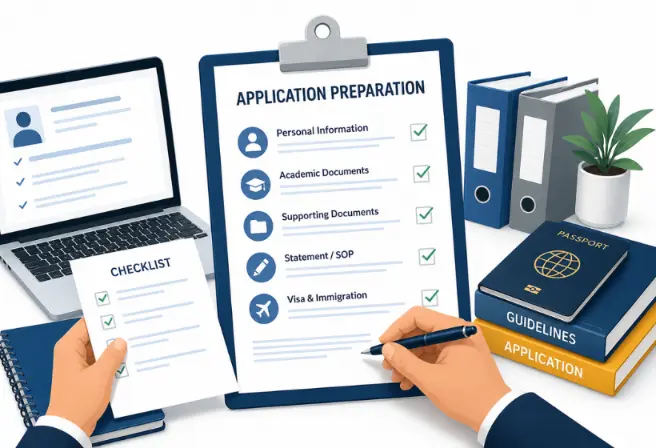

A successful study-abroad plan starts with clear outcomes. We help you define your academic and career objectives, then support you with application preparation, including SOPs, personal statements, essays, and recommendation planning for your target universities.


Receive country-specific guidance on visa documentation, application procedures, and preparation requirements. For U.S. student visas, this includes understanding key steps such as completing the DS-160 and following official consulate processes and requirements.

Why Students Choose Unipath
A study-abroad plan starts with outcomes.
We begin with what you want your degree to unlock—career, graduate school, immigration possibilities, cost constraints—then select countries and institutions that fit those outcomes.
Visa basics (high-level, official-first).
Visa requirements and application procedures vary by country and visa category. Applicants should begin by reviewing the relevant government or embassy website for official guidance on the application form, required documents, fee appointments, interview processing times, and other applicable requirements .
Question & Answer
Quick answers to common queries
Yes—school selection, timeline management, and application package support, including Common App workflows where applicable.
We use official-source checklists and coordinate with licensed partners as needed; visa rules vary by country and applicant profile.
The U.S. Department of State describes completing the DS-160 as a core step in the process (alongside other consular requirements).
UK guidance outlines showing money for course fees and living costs, with document requirements depending on circumstances.
No—Europe is country-specific. EU guidance emphasises checking whether you need a visa and distinguishing short- vs long-stay requirements.